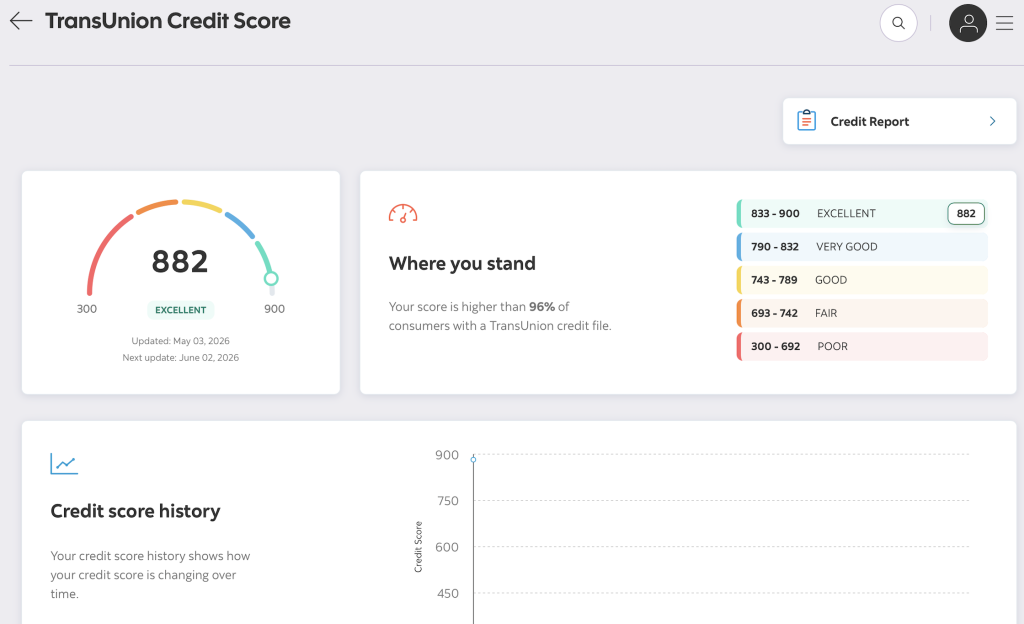
Many people in Canada use credit cards, loans, and mortgages. Because of this, having a good credit score is very important. Your credit score shows lenders if you are responsible with money. Lenders are happier lending money to people with higher credit score. A high credit score can help you save money and reach your financial goals more easily.
Vocabulary
- Credit score — A number that shows how well you manage money and debt.
- Lender — A bank or company that gives loans.
- Responsible — Acting carefully and making good decisions.
- Financial goals — Money plans for the future.
What Is a Credit Score?
A credit score is a number between 300 and 900 in Canada. It shows how well you pay your bills and manage debt. Banks (lenders) check your score before giving you loans or credit cards.
People with higher scores are usually trusted more by lenders.
Vocabulary
- Debt — Money that you borrowed and you then owe the bank or lender.
- Loan — Money borrowed from a bank or lender.
- Trusted — Believed to be honest and reliable.
- Bills — Money you must pay regularly for things like electricity, heat, Internet or phone.
Why Is a Good Credit Score Important?

A good credit score is important for a number of reasons:
Easier Approval
A good credit score can help you get approved for loans, credit cards, and mortgages more easily.
Lower Interest Rates
People with good credit scores often pay lower interest rates. This helps them save money over time.
Better Opportunities
A good credit score may also help you rent an apartment or qualify for better financial products (car loans).
Vocabulary
- Approval — Permission from a bank or lender (to get a mortgage, for example).
- Interest rate — The extra money (expressed in percentage: %) paid when borrowing money.
- Mortgage — A loan used to buy a home.
- Qualify — To meet the requirements or conditions for something.
How Can You Improve Your Credit Score?
You can do the following things to improve your credit score. It usually takes a fair amount of time to do so. Consequently, if you are planning on getting a loan or buying a house, it is wise to start building your credit early.
Pay Bills on Time
Always pay your bills before the due date. Late payments can lower your credit score.
Use Less Credit
Try not to use too much of your credit card limit. Experts recommend using less than 30%.
Avoid Too Many Applications
Applying for many credit cards in a short time can hurt your score.
Check Your Credit Report
Review your credit report regularly to make sure the information is correct.
Vocabulary
- Credit report — A document showing your credit history and credit score.
- Due date — The last day to pay something.
- Credit limit — The maximum amount you can borrow (spend on a credit card).
- Application — A request for credit or a loan.
Conclusion
A good credit score is an important part of financial success in Canada. It can help you borrow money, save on interest, and reach your goals more easily. Good financial habits can improve your credit score over time.
Vocabulary
- Financial success — Managing money well and reaching money goals.
- Borrow — To take money that must be paid back later.
- Habits — Things you do regularly.
- Improve — To make something better.