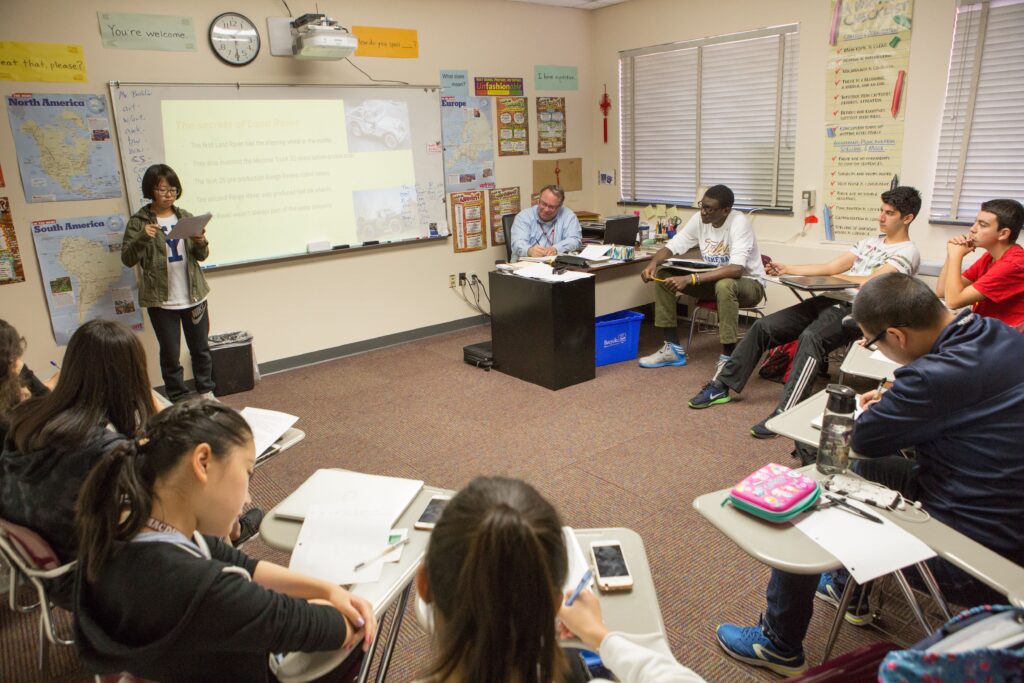
Attending a school open house is an excellent opportunity to learn about an educational institution, meet teachers, explore classrooms, and ask questions about your child’s education. In Canada, schools, colleges, and universities may organize open houses to help families and prospective students understand their programs, facilities, and expectations.
For newcomer parents, these events are also an opportunity to practise English and become familiar with the Canadian education system. You may need to ask about classroom routines, school policies, homework, student support, tuition fees, or admission requirements.
In this article, you will learn essential vocabulary and useful expressions for attending an open house at a kindergarten, elementary school, high school, or college or university. You will also practise using the vocabulary through matching, fill-in-the-blank, and conversation exercises.
1. General Vocabulary for a School Open House
These words and expressions are useful when visiting almost any educational institution.
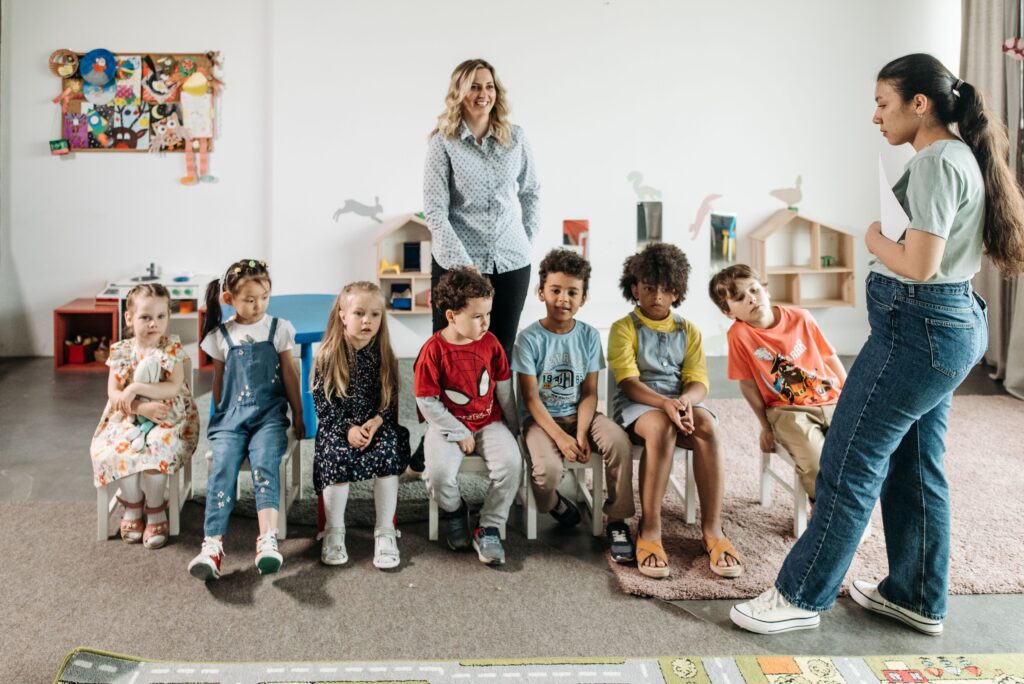
Open house
An event when a school welcomes visitors and allows them to learn about the school.
Example: We are attending the school’s open house on Thursday.

Staff
The people who work at a school, including teachers, administrators, and support workers.
Example: The school staff welcomed the families.

Principal
The person who manages a school and supervises its staff.
Example: The principal explained the school rules.

Brochure
A small booklet or folded paper that provides information about a school or program.
Example: I picked up a brochure about the school’s programs.
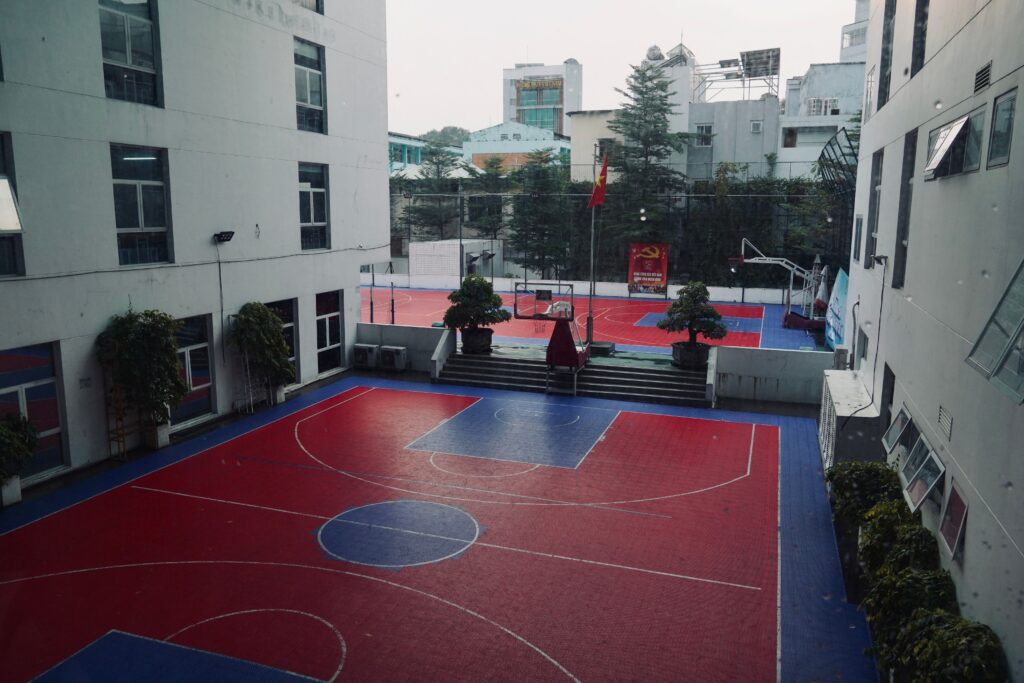
Facilities
The buildings, rooms, and equipment available at a school.
Example: We toured the school facilities, including the library and gym.

Inquire about
To ask for information about something.
Example: I would like to inquire about the school’s transportation options.
Other useful vocabulary
| Word or expression | Simple meaning |
|---|---|
| School tour | A guided visit around a school |
| Classroom | A room where students learn |
| Curriculum | The subjects and content students learn |
| School policy | A rule or guideline followed by the school |
| Support services | Help available to students who need it |
| Enrolment | The process of registering a student at a school or program |
| Schedule | A plan showing times for classes or activities |
| Supervision | Watching and ensuring students are safe |
| Expectations | What someone is expected to do |
| Registration | The process of officially signing up |
2. Attending a Kindergarten Open House
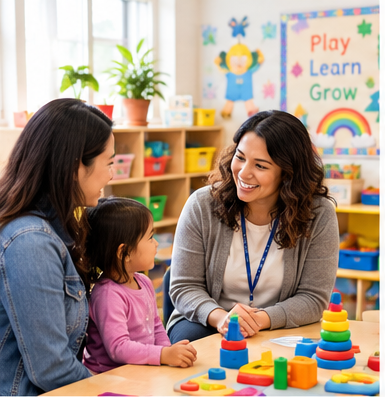
Kindergarten is often a child’s first experience of a formal school environment. In Ontario, kindergarten generally includes Junior Kindergarten (JK) and Senior Kindergarten (SK). An open house gives parents an opportunity to learn about the classroom, daily routines, play-based learning, and how the school helps young children adjust.
Essential kindergarten vocabulary
| Vocabulary | Meaning and example |
|---|---|
| Play-based learning | Learning through play and activities. The kindergarten uses play-based learning. |
| Nap or rest time | A period for children to rest. Do the children have a rest time? |
| Snack time | Time for children to eat a small meal. What should I pack for snack time? |
| Washroom routine | The usual process of using the bathroom. Will someone help my child with the washroom routine? |
| Drop-off | The time when parents bring children to school. Where is the kindergarten drop-off area? |
| Pick-up | The time when parents collect children. What time is pick-up? |
| Outdoor play | Time spent playing outside. How often do the children have outdoor play? |
| Separation anxiety | Worry a child may feel when separated from a parent. How do teachers help children with separation anxiety? |
| School readiness | The skills and abilities that help a child participate in school. What skills are important for school readiness? |
| Before- and after-school care | Supervised care before or after regular school hours. Is before- and after-school care available? |
Useful questions to ask
- What does a typical kindergarten day look like?
- How do you help children who are shy or nervous?
- Do children need to bring their own snacks and lunches?
- How do you communicate with parents about their child’s progress?
- What should my child be able to do independently?
- Is there a before- and after-school program?
Example conversation
Parent: Good morning. My child will be starting kindergarten next September. Could you tell me about the daily routine?
Teacher: Of course. The children participate in learning activities, play, outdoor time, and group activities.
Parent: That sounds great. My child is a little shy. How do you help children adjust to the classroom?
Teacher: We help them feel comfortable by establishing routines and encouraging them to participate at their own pace.
Parent: Thank you. That is very helpful.
3. Attending an Elementary School Open House
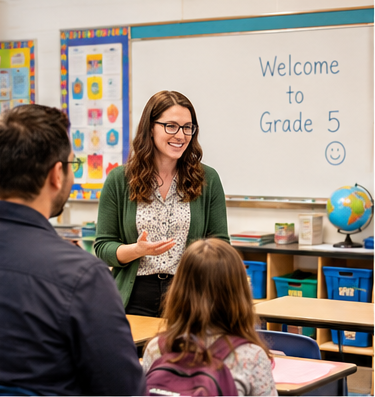
Elementary school in Ontario generally includes Grades 1–8, following the two kindergarten years. During an open house, parents can learn about academic expectations, homework, assessment, extracurricular activities, and student support.
Essential elementary school vocabulary
| Vocabulary | Meaning and example |
|---|---|
| Homework | Schoolwork completed at home. How much homework do students receive? |
| Assignment | A piece of work students must complete. When is the next assignment due? |
| Assessment | A way to measure a student’s learning. How do you assess students’ progress? |
| Report card | A document describing a student’s achievement and progress. When are report cards sent home? |
| Parent-teacher interview | A meeting between a parent and a teacher to discuss a student’s progress. How do I book a parent-teacher interview? |
| Learning support | Help for students who need additional assistance. What learning support is available? |
| Special education | Educational services for students with identified learning needs. Could you explain the special education services? |
| Extracurricular activities | Activities outside regular lessons, such as clubs and sports. What extracurricular activities are offered? |
| Recess | A break when students can play or relax. How long is recess? |
| School bus route | The route followed by a school bus. How can I find out about school bus routes? |
Useful questions to ask
- What subjects do students study in this grade?
- How much homework should we expect each week?
- How can parents check their child’s progress?
- What should I do if my child is struggling with reading or mathematics?
- Are there clubs, sports teams, or other extracurricular activities?
- What is the school’s policy on absences and late arrivals?
Example conversation
Parent: Hello. I would like to learn more about the Grade 4 program.
Teacher: Certainly. Students study language, mathematics, science, social studies, and other subjects.
Parent: How can I support my child’s learning at home?
Teacher: You can encourage daily reading, review homework, and communicate with the teacher if you have concerns.
Parent: How can I contact the teacher if my child needs extra help?
Teacher: You can email the teacher or arrange a meeting.
4. Attending a High School Open House

High school in Ontario generally includes Grades 9–12. Students take courses to earn credits toward their Ontario Secondary School Diploma (OSSD). Depending on their interests and future plans, they may explore academic pathways, specialized programs, co-op education, and extracurricular opportunities.
Essential high school vocabulary
| Vocabulary | Meaning and example |
|---|---|
| Credit | Recognition earned by successfully completing a secondary school course. How many credits are required to graduate? |
| Compulsory course | A course students must take to meet graduation requirements. Which compulsory courses must students complete? |
| Elective | A course students can choose based on their interests, subject to program requirements. Which electives are available in Grade 10? |
| Prerequisite | A course or requirement that must be completed before taking another course or program. Is there a prerequisite for this course? |
| Academic pathway | A route through education based on a student’s goals and plans. Which pathway would suit a student who wants to attend university? |
| Co-op education | A program that combines classroom learning with a work placement. Does the school offer co-op education? |
| Guidance counsellor | A school professional who helps students with courses, goals, and future plans. Can we meet with a guidance counsellor? |
| Graduation requirements | The courses, credits, and other requirements students must meet to graduate. Could you explain the graduation requirements? |
| Specialist High Skills Major (SHSM) | An Ontario program that lets students focus on a particular economic sector while earning their diploma. Does the school offer an SHSM in health and wellness? |
| Community involvement hours | Volunteer hours students complete to meet Ontario secondary school graduation requirements. How do students record their volunteer hours? |
Useful questions to ask
- How does course selection work?
- What is the difference between university and college preparation courses?
- How can students get help choosing their courses?
- Does the school offer co-op placements or specialized programs?
- What support is available for students who are new to Canada?
- How can students get information about scholarships and postsecondary education?
Example conversation
Parent: My daughter is interested in science and hopes to study engineering after high school. What courses should she consider?
Guidance counsellor: She should plan her courses carefully, including the mathematics and science courses required for her intended university programs.
Parent: When should she begin planning her courses?
Guidance counsellor: She should speak with her guidance counsellor during course selection and review the admission requirements of the universities she is interested in.
Parent: Thank you. We will look into those requirements.
5. Attending a College or University Open House
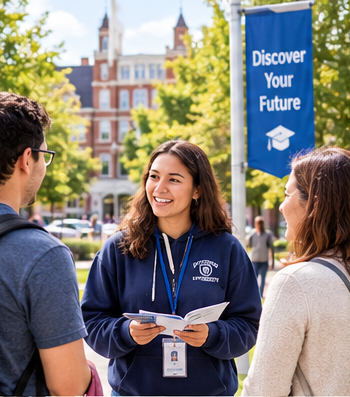
College and university open houses help prospective students explore programs, speak with faculty and current students, visit campus facilities, and learn about admission requirements. Parents may also attend to support their children in making informed decisions.
In Canada, colleges often offer diplomas, certificates, applied degrees, and career-focused programs. Universities primarily offer undergraduate and graduate degrees, although the range of programs varies by institution.
Essential college and university vocabulary
| Vocabulary | Meaning and example |
|---|---|
| Prospective student | Someone who is considering applying to a school. The open house is designed for prospective students. |
| Admission requirements | The qualifications needed to enter a program. Where can I find the admission requirements? |
| Application deadline | The last date to submit an application. What is the application deadline? |
| Program | A course of study leading to a qualification. I am interested in the nursing program. |
| Tuition fees | The cost of instruction. How much are the annual tuition fees? |
| Scholarship | Money awarded to help pay for education, often based on achievement or other criteria. Are international and domestic students eligible for scholarships? |
| Financial aid | Financial assistance that helps students pay for education. Where can I learn about financial aid? |
| Campus | The grounds and buildings of a college or university. We took a tour of the campus. |
| Residence | Student accommodation provided by an institution. Is on-campus residence available for first-year students? |
| Internship | A period of practical work experience related to a field of study. Does the program include an internship? |
| Work-integrated learning | Learning that combines academic study with workplace experience. Does the program offer work-integrated learning opportunities? |
| Academic advisor | A person who advises students about their studies and academic plans. Can I speak with an academic advisor? |
Useful questions to ask
- What are the admission requirements for this program?
- When is the application deadline?
- How much are the tuition fees and other mandatory costs?
- Are scholarships, bursaries, or other financial aid available?
- Does the program include a co-op placement or internship?
- What career opportunities are available to graduates?
- Is student housing available on campus?
- What services are available for students who need academic or language support?
Example conversation
Prospective student: Hello. I am interested in the business administration program. Could you tell me about the admission requirements?
Admissions representative: Certainly. The requirements depend on the program. You can find the details on the program’s admissions page.
Prospective student: Thank you. What are the application deadline and tuition fees?
Admissions representative: The deadline and fees are listed on the institution’s website. I can show you where to find that information.
Prospective student: That would be very helpful. Does the program also offer work experience?
Admissions representative: Yes, some programs include co-op or other work-integrated learning opportunities. You should check the specific program details.
6. Polite Expressions for Asking Questions
When attending an open house, polite expressions help you sound confident and respectful. You do not need complicated English to ask useful questions.
| Expression | Example |
|---|---|
| Could you tell me more about…? | Could you tell me more about the lunch program? |
| I would like to know whether… | I would like to know whether school bus service is available. |
| Could you explain how…? | Could you explain how course selection works? |
| Would it be possible to…? | Would it be possible to arrange a meeting with the teacher? |
| Where can I find information about…? | Where can I find information about tuition fees? |
| What should I do if…? | What should I do if my child is absent? |
| Is there an opportunity to…? | Is there an opportunity to visit the classrooms? |
| Thank you for taking the time to explain. | Thank you for taking the time to explain the program. |
Fluency tip: If you do not understand an answer, it is perfectly acceptable to ask someone to repeat or clarify it.
Try these expressions:
- “Could you repeat that a little more slowly, please?”
- “Could you explain what that means?”
- “Let me make sure I understand.”
- “Would you mind writing that down for me?”
Practice

Practice 1: Choose A, B or C to Match the words with their meanings:
| Word | Option A | Option B | Option C |
|---|---|---|---|
| 1. Principal | A person who manages a school | Money awarded to help pay for education | A break during the school day |
| 2. Prerequisite | A school report | A requirement that must be completed first | A school tour |
| 3. Tuition fees | The cost of instruction | A volunteer activity | A classroom routine |
| 4. Extracurricular activities | Mandatory school subjects | Activities outside regular lessons | Admission documents |
| 5. Play-based learning | Learning through play and activities | Learning only from textbooks | A university admission test |
| 6. Campus | A school rule | A university application | The grounds and buildings of an institution |
Practice 2: Fill in the blanks
Choose the correct word from the vocabulary list to complete each sentence.
brochure · report card · guidance counsellor · snack time · application deadline · school tour · co-op education · learning support
- At kindergarten, children usually have time to eat during __________.
- The teacher sent home my child’s __________ to show her progress.
- We picked up a __________ that described the school’s programs.
- The principal showed us around the building during the __________.
- I would like to speak with a __________ about my son’s course choices.
- What is the __________ for submitting an application to the university?
- My daughter wants to gain work experience while studying, so she is interested in __________.
- My child is having difficulty with reading. What kind of __________ is available?
Practice 3: Choose the best question
Select the most appropriate question for each situation.
1. You want to know how kindergarten teachers help shy children.
How many credits do I need to graduate?
How do you help shy children adjust to the classroom?
What are the tuition fees?
2. You want to know which subjects your child will study in Grade 5.
What subjects do students study in Grade 5?
Where is the campus residence?
What is the application deadline?
3. Your teenager wants to study engineering at university.
When is snack time?
How long is recess?
Which courses are required for university engineering programs?
4. You want to know whether a college program includes workplace experience.
Does the program include a co-op placement or internship?
How do I report my child’s absence?
Where is the kindergarten washroom?
Practice 4: Speaking: Prepare for an Open House
Imagine that you are attending an open house in Canada. Choose one situation and practise asking at least five questions.

Situation A: Kindergarten
Your child will start kindergarten next year. Ask about the daily routine, snacks, outdoor play, and before- and after-school care.

Situation B: Elementary school
Your child is entering Grade 5. Ask about homework, report cards, extracurricular activities, and learning support.

Situation C: High school
Your teenager is entering Grade 9. Ask about course selection, credits, graduation requirements, and guidance counselling.

Situation D: College or university
You are exploring a program for your child. Ask about admission requirements, tuition fees, scholarships, and work experience.
Write your questions for:
Kindergarten:
Elementary school:
High school:
College or university:
Practice 5: Writing :Write an Email to the School
Imagine that you cannot attend the open house in person. Write an email to the school to ask for information.
Include the following points:
- Introduce yourself and your child.
- Explain that you cannot attend the open house.
- Ask two or three questions about the school.
- Ask whether you can arrange another visit or receive information by email.
- Thank the staff for their help.
Useful expressions:
- I am writing to inquire about…
- Unfortunately, I am unable to attend…
- Could you please provide information about…?
- Would it be possible to arrange a visit at another time?
- Thank you for your time and assistance.
Reflection: What Have You Learned?
Before finishing, think about these questions:
- Which new vocabulary words can you use confidently?
- Which questions would you feel comfortable asking a teacher?
- Which expressions could help you if you do not understand an answer?
- What information would you most like to learn at your child’s next school open house?
You do not need to understand every word or speak perfect English to participate successfully. Preparing a few questions in advance can help you feel more confident and make the most of your visit.
Remember: A school open house is an opportunity to learn, ask questions, and build a connection with the school community. The more you practise these expressions, the easier it becomes to communicate with teachers, school staff, and admissions representatives.