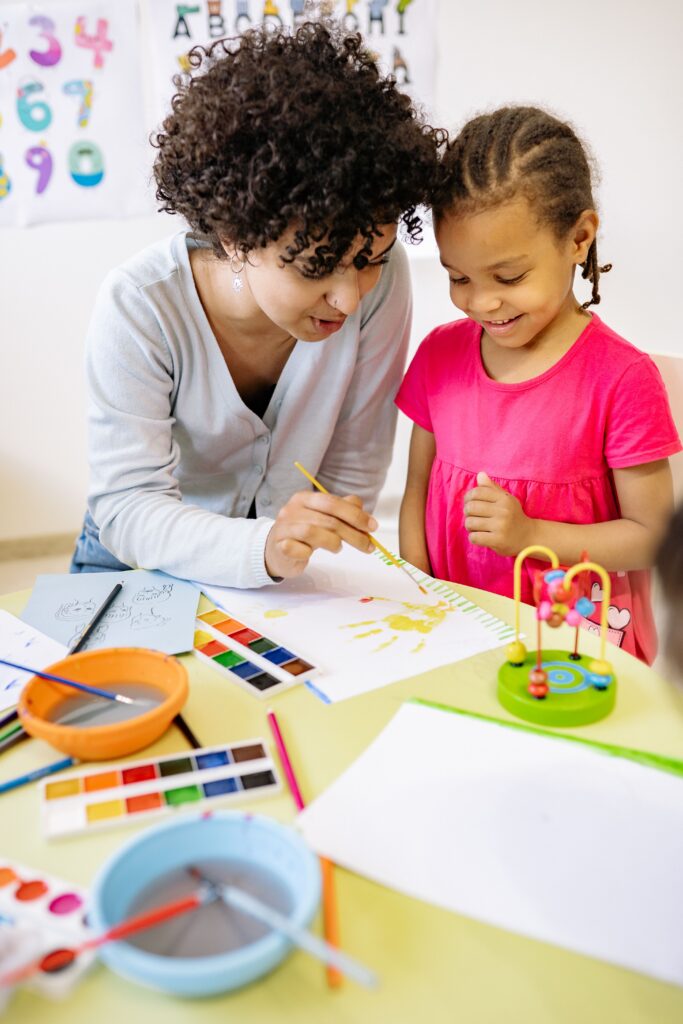
Talking to your child’s teacher is an important skill for newcomer parents in Canada. Parents often need to discuss their child’s learning progress, homework, classroom behaviour, and friendships. If English is not your first language, learning useful school vocabulary can help you communicate more confidently.
In this article, you will learn practical English words, polite expressions, and questions you can use when meeting your child’s teacher. You will also practise a short conversation and learn how to write an email requesting a meeting.
1. Essential Vocabulary for Talking to Your Child’s Teacher
Here are some important words you may hear when speaking with your child’s teacher.
| Vocabulary | Simple Definition | Example Sentence |
|---|---|---|
| Teacher | A person who helps students learn | I would like to speak with my child’s teacher. |
| Classroom | A room where students learn | My daughter enjoys her classroom activities. |
| Progress | Improvement or development over time | I would like to know about my son’s progress. |
| Strength | Something a person does well | Reading is one of her strengths. |
| Challenge | Something that is difficult | Writing is a challenge for my child. |
| Behaviour | The way a person acts | The teacher told me about his behaviour in class. |
| Participation | Taking part in an activity | My child’s participation has improved. |
| Assignment | A piece of schoolwork students must complete | My son has a science assignment to finish. |
| Deadline | The last date or time to complete something | When is the deadline for this project? |
| Feedback | Comments about how someone is doing | The teacher gave my daughter helpful feedback. |
2. Talking to Your Child’s Teacher About Academic Progress
Teachers often discuss a child’s academic progress, including what the child understands, what they do well, and where they need additional support.
| Vocabulary | Simple Definition | Example Sentence |
|---|---|---|
| Academic progress | How a student is developing in school subjects | I would like to discuss my child’s academic progress. |
| Reading comprehension | The ability to understand what you read | Her reading comprehension is improving. |
| Writing skills | The ability to express ideas in writing | How can we improve his writing skills? |
| Numeracy | The ability to understand and use numbers | My child needs more practice with numeracy. |
| Learning goals | Things a student is working toward learning | What are my child’s learning goals this term? |
| Improvement | Getting better at something | I have noticed an improvement in his reading. |
| Achievement | Something a student has successfully learned or completed | The teacher recognized her achievements. |
| Extra support | Additional help with learning | Does my child need extra support in mathematics? |
| Assignment | Work given to students to complete | My child needs help with a history assignment. |
| Study habits | The ways a student studies and prepares for schoolwork | We are trying to develop better study habits at home. |
Useful Expressions
You can use these expressions to ask about your child’s learning:
- “How is my child doing in reading and writing?”
- “What are my child’s strengths?”
- “Which areas does my child need to improve?”
- “What can we practise at home?”
- “Does my child need any extra support?”
- “Could you explain the learning goals for this term?”
Tip: If you do not understand a teacher’s explanation, you can politely say, “Could you please explain that in simpler words?”
3. Talking to Your Child’s Teacher About Behaviour
School is not only about academic learning. Teachers also observe how children behave, communicate, cooperate, and interact with their classmates.
| Vocabulary | Simple Definition | Example Sentence |
|---|---|---|
| Classroom rules | Instructions students must follow in class | Could you explain the classroom rules? |
| Respectful | Showing consideration for other people | My child is learning to be respectful. |
| Cooperative | Willing to work with others | She is cooperative during group activities. |
| Independent | Able to do things without much help | He is becoming more independent. |
| Distraction | Something that takes attention away from a task | Noise can be a distraction during lessons. |
| Conflict | A disagreement between people | My child had a conflict with a classmate. |
| Peer | A person of a similar age or level | My daughter enjoys working with her peers. |
| Bullying | Repeated behaviour intended to hurt, intimidate, or exclude someone | I am concerned that my child may be experiencing bullying. |
| Responsibility | The duty to do something or take care of something | My son is learning to take responsibility for his homework. |
| Emotional well-being | How a person feels emotionally | I would like to discuss my child’s emotional well-being. |
Useful Expressions
- “How does my child interact with other students?”
- “Does my child participate in group activities?”
- “Have you noticed any changes in my child’s behaviour?”
- “My child has been feeling worried about school.”
- “I am concerned about a problem with a classmate.”
- “What can we do to help my child feel more comfortable at school?”
Important: If you are concerned about bullying, describe what your child has told you and ask the teacher what steps the school can take to address the situation.
4. Useful Expressions for Talking to Your Child’s Teacher
When contacting a teacher, it is helpful to begin politely and explain why you would like to speak with them.
| Situation | Useful Expression |
|---|---|
| Requesting a meeting | I would like to arrange a meeting to discuss my child’s progress. |
| Asking for a short conversation | Do you have a few minutes to talk? |
| Explaining your concern | I have a concern about my child’s homework. |
| Asking about performance | I would like to know how my child is doing in class. |
| Asking for clarification | Could you explain that to me, please? |
| Requesting advice | What would you recommend we do at home? |
| Showing appreciation | Thank you for taking the time to speak with me. |
| Ending the conversation | Thank you for your help. I appreciate your support. |
Example Conversation
Parent: Good morning. I would like to ask you about my daughter’s progress in reading.
Teacher: Of course. What would you like to know?
Parent: She enjoys reading at home, but she sometimes has difficulty understanding what she reads.
Teacher: Her reading fluency is improving, but she needs more practice with reading comprehension.
Parent: What can we do at home to help her?
Teacher: You could read short stories together and ask her questions about the main idea and important details.
Parent: That sounds helpful. Thank you for your advice.
Teacher: You’re welcome. Please let me know if you have any other questions.
Comprehension Questions
- What is the parent concerned about?
- What is improving?
- What does the teacher recommend?
- How does the parent end the conversation?
5. Preparing to Talk to Your Child’s Teacher at a Conference
A parent-teacher conference is a meeting where parents and teachers discuss a student’s learning, progress, and needs. Schools may schedule these meetings during the school year or offer them when a concern arises.
| Vocabulary | Simple Definition | Example Sentence |
|---|---|---|
| Parent-teacher conference | A meeting between a parent and a teacher | I have a parent-teacher conference next week. |
| Appointment | An arranged time to meet someone | I would like to book an appointment with the teacher. |
| Report card | A document showing a student’s progress and achievement | I would like to discuss my child’s report card. |
| Assessment | A way to check what a student knows or can do | The teacher explained the recent assessment. |
| Grade | A mark or level showing performance, or a school year level | What grade did my child receive on the assignment? |
| Learning difficulty | A problem that makes learning certain skills more difficult | I would like to discuss a learning difficulty. |
| Recommendation | Advice about what someone should do | Do you have any recommendations for helping my child? |
| Follow-up | Another conversation or action after an earlier meeting | Could we arrange a follow-up meeting next month? |
Questions to Ask at a Conference
Before attending a meeting, prepare two or three questions. This can help you use your time effectively.
About learning
- “What are my child’s strongest subjects?”
- “Which skills should my child practise more?”
- “Is my child meeting the expected learning goals?”
About homework
- “How much time should my child spend on homework?”
- “What should I do if my child does not understand an assignment?”
- “Where can we find additional practice activities?”
About classroom participation
- “Does my child ask questions when something is unclear?”
- “Does my child work well with classmates?”
- “Is my child comfortable participating in class?”
About next steps
- “What should we focus on over the next few weeks?”
- “How can I support my child at home?”
- “When would it be helpful to meet again?”
6. Polite Ways to Express Concerns
Sometimes parents need to discuss a difficult situation. Using calm, respectful language can help both the parent and teacher work toward a solution.
| Instead of Saying | Try Saying |
|---|---|
| My child is not learning anything. | I am concerned about my child’s progress. |
| You give too much homework. | I am wondering whether we could discuss the amount of homework. |
| My child says you are unfair. | My child feels that a situation was unfair. Could we discuss what happened? |
| You never help my child. | I would like to understand what support is available for my child. |
| My child cannot do this work. | My child is finding this work difficult. What would you recommend? |
| Why did you give my child this mark? | Could you explain how this assignment was assessed? |
Communication tip: Explain what you have observed, ask questions, and listen to the teacher’s perspective. If you disagree, you can express your concern politely and ask what steps can be taken next.
Practice
Vocabulary Practice 1:
Match each word with the correct definition.
| Word | Definition |
| 1.Progress 2. Deadline 3. Strength 4. Feedback 5. Assignment | A. Comments that help someone understand how they are doing B. The last date to finish something C. Something a person does well D. Improvement over time E. A piece of schoolwork to complete |
Answers: 1–D, 2–B, 3–C, 4–A, 5–E
Vocabulary Practice 2:
Complete the Sentences. Choose the correct word:
Word bank: progress · deadline · conference · feedback · support · behaviour
- I would like to discuss my child’s academic __________.
- When is the __________ for the science project?
- The teacher gave me helpful __________ about my son’s writing.
- We have a parent-teacher __________ next Thursday.
- My child needs extra __________ with mathematics.
- The teacher wants to discuss my child’s __________ in class.
Answers: 1. progress; 2. deadline; 3. feedback; 4. conference; 5. support; 6. behaviour.
Speaking Practice: Talk to Your Child’s Teacher
Imagine that you are meeting your child’s teacher. Your child enjoys school but has difficulty completing homework independently.
Use the prompts below to practise a short conversation.
Step 1: Start the conversation
“Hello. I would like to discuss…”
Step 2: Explain the concern
“At home, my child sometimes has difficulty…”
Step 3: Ask for advice
“What can we do to help my child…?”
Step 4: Ask about next steps
“Would it be possible to…”
Step 5: End politely
“Thank you for your time and…”
Your Speaking Challenge
Speak for one to two minutes. Try to include at least five words from this article, such as progress, learning goals, extra support, assignment, and recommendation.
Writing Practice: Send an Email to Your Child’s Teacher
Situation: Your child is having difficulty completing homework and feels frustrated. Write an email to the teacher requesting a meeting.
Include the following information:
- Explain why you are contacting the teacher.
- Describe the difficulty your child is experiencing.
- Ask for a meeting or advice.
- Thank the teacher for their time.
Helpful Email Template
Subject: Request for a Meeting About My Child’s Progress
Dear [Teacher’s Name],
I am writing to discuss my child’s homework and learning progress. Recently, my child has been having difficulty completing assignments independently and sometimes feels frustrated.
I would appreciate the opportunity to meet with you to discuss how I can support my child at home. Could you please let me know when you would be available for a short meeting?
Thank you for your time and support. I look forward to hearing from you.
Kind regards,
[Your Name]
Canada Tip: Building a Partnership with Your Child’s School
In Canada, parents and teachers often work together to support children’s learning and well-being. You do not need to wait until a problem becomes serious before contacting the school.
Here are some practical tips for newcomer parents:
- Check school communications: Read emails, newsletters, school notices, and messages from your child’s teacher.
- Ask questions: It is perfectly acceptable to ask for clarification if you do not understand a school term or instruction.
- Prepare before meetings: Write down your questions and any concerns you want to discuss.
- Share important information: Let the teacher know if something at home may be affecting your child’s learning or well-being.
- Follow up when needed: If you agree on a plan, check in with the teacher to discuss your child’s progress.
- Ask about interpretation: If you need language support for an important meeting, ask the school whether interpretation services are available.
Remember, you know your child well, and the teacher has experience observing your child at school. Sharing information can help both of you better understand your child’s needs.
Conclusion
Talking to your child’s teacher is an important skill for newcomer parents in Canada. By learning school-related vocabulary and practising polite expressions, you can become more confident when asking questions, discussing academic progress, and expressing concerns.
Start by learning a few words each day. Practise asking questions aloud, and use the example conversation and email template to prepare for real situations.
Your weekly goal: Learn ten new words, practise asking three questions you could use in a parent-teacher meeting, and write a short email requesting a meeting with your child’s teacher.
Small steps can help you communicate more confidently and become a more active partner in your child’s education.