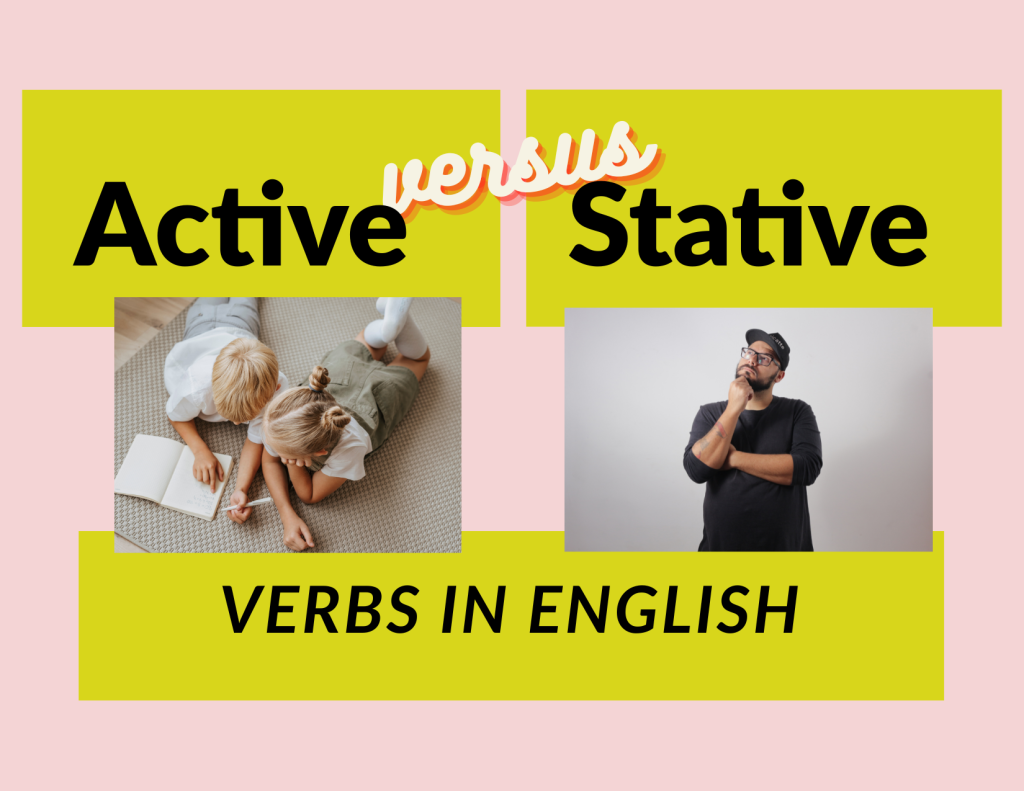
Active Verbs vs. Stative Verbs
One of the most common grammar mistakes English learners make is using continuous tenses with verbs that describe a state rather than an action. This lesson is going to explain the difference between active verbs and stative verbs.
For example:
❌ I am knowing the answer.
The correct sentence is:
✅ I know the answer.
To understand why, you need to know the difference between active verbs and stative verbs.
What Are Active Verbs?
Active verbs (also called dynamic verbs) describe actions, activities, or events. They usually show something a person or thing does.
Since actions can continue over time, these verbs are commonly used in continuous (-ing) tenses.
Examples
- She is running.
- They are cooking dinner.
- I am studying English.
- He was driving home.
- We have been waiting for an hour.
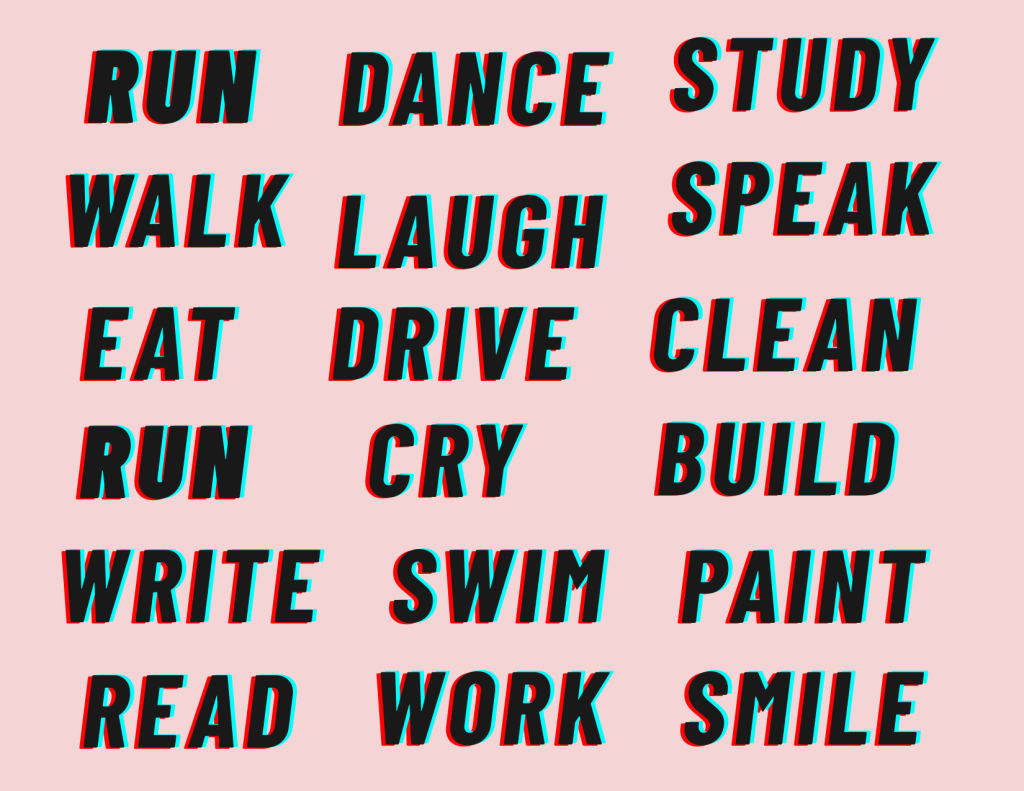
Common Active Verbs
What Are Stative Verbs?
Stative verbs describe:
- thoughts
- feelings
- opinions
- possession
- senses
- relationships
- states of being
These are not actions, so they usually do not appear in continuous tenses.
Instead, we use the Simple Present, Simple Past, or Present Perfect.
Common Categories of Stative Verbs
1. Thoughts and Opinions
- know
- believe
- understand
- remember
- forget
- realize
- recognize
- suppose
- imagine
- think (opinion)
Examples:
✅ I know the answer.
❌ I am knowing the answer.
2. Feelings
- love
- like
- dislike
- hate
- prefer
- adore
- want
- need
- wish
Examples
✅ She loves chocolate.
❌ She is loving chocolate.
3. Possession
- have (ownership)
- own
- possess
- belong
- contain
- include
Examples
✅ I have two sisters.
❌ I am having two sisters.
4. Senses
- hear
- smell
- taste
- see
- seem
- appear
Examples
✅ This soup tastes delicious.
❌ This soup is tasting delicious.
5. Relationships
- belong
- depend
- involve
- consist
Examples
✅ This book belongs to me.
❌ This book is belonging to me.
Why Don’t Stative Verbs Use -ing?
Continuous tenses describe actions that are happening right now or are temporary.
A state is not usually something that is “in progress.”
Compare:
✅ I am running.
(Running is an action.)
✅ I know her.
(Knowing is a state.)
Common Mistakes
Incorrect
I am understanding.
Correct
I understand.
Incorrect
She is owning a car.
Correct
She owns a car.
Incorrect
We are believing you.
Correct
We believe you.
Important Exceptions
Some verbs can be both stative and active, depending on their meaning.
This is one of the most important grammar points in English.
1. Think
Opinion (stative)
I think this movie is great.
(Not continuous.)
Considering (active)
I’m thinking about moving to Canada.
(Continuous is correct.)
2. Have
Possession (stative)
She has a new phone.
Experience or activity (active)
We’re having dinner.
They’re having a meeting.
I’m having a wonderful time.
3. See
Understand or perceive (stative)
I see what you mean.
Meet or visit (active)
I’m seeing my dentist tomorrow.
She’s seeing her friends tonight.
4. Taste
Opinion (stative)
The cake tastes sweet.
Action (active)
The chef is tasting the soup.
5. Smell
State
The flowers smell wonderful.
Action
The dog is smelling the flowers.
6. Feel
Opinion or condition
I feel tired.
Physical action
She is feeling the fabric.
7. Look
Appearance (stative)
You look happy.
Action
She is looking for her keys.
8. Be
Normally, be is not used in continuous tenses.
✅ She is kind.
However, English speakers sometimes use being to describe temporary behaviour.
Examples
You’re being rude.
He’s being silly.
The children are being noisy today.
Notice that this refers to behaviour right now, not personality.
9. Love
Normally:
However, in advertising or informal speech:
I love this song.
“I’m loving it.”
This sounds natural because it emphasizes enjoyment at the moment.
Quick Comparison
| Stative Meaning | Active Meaning |
|---|---|
| I think you’re right. | I’m thinking about my future. |
| She has a car. | She’s having lunch. |
| I see your point. | I’m seeing the doctor tomorrow. |
| The soup tastes salty. | The chef is tasting the soup. |
| The flowers smell nice. | The dog is smelling the flowers. |
| You look tired. | She’s looking for her phone. |
| He feels sick. | He’s feeling the material. |
Tips for Remembering
Ask yourself:
Is this describing an action or a state?
If it is a state, do not use -ing.
If it is an action happening now, the continuous tense may be correct.
Practice
Exercise 1 – Choose the Correct Sentence
a) I’m knowing the answer.
b) I know the answer.
a) She’s having lunch.
b) She has lunch now.
a) I think he’s right.
b) I’m thinking he’s right.
a) The soup tastes good.
b) The soup is tasting good.
a) They’re seeing the dentist tomorrow.
b) They see the dentist tomorrow.
Exercise 2 – Correct the Mistakes
- I am believing you.
- She is owning a house.
- He is understanding the lesson.
- We are needing more time.
- This flower is smelling beautiful.
Exercise 3 – Stative or Active?
Write S for stative or A for active.
- She is writing a letter. _____
- I know the answer. _____
- They are cooking dinner. _____
- We believe you. _____
- He’s looking for his glasses. _____
- She owns a bakery. _____
- The baby is sleeping. _____
- I prefer coffee. _____
- We’re having a great time. _____
- This soup tastes delicious. _____
Exercise 4 – Fill in the Blanks
Use the correct form of the verb.
- I __________ (know) the answer.
- She __________ (study) right now.
- They __________ (have) dinner.
- He __________ (believe) the story.
- The dog __________ (smell) the flowers.
- We __________ (love) our new home.
- I __________ (think) about changing jobs.
- This cake __________ (taste) amazing.
Exercise 5 – Rewrite the Sentences
Rewrite the sentence using the correct tense.
- I am knowing her.
- We are having two cats.
- The soup is tasting delicious.
- I’m thinking you’re correct.
- He is being very helpful today.
Speaking Practice
Work with a partner or record yourself answering these questions.
- What are you doing this week?
- What do you know about Canada?
- What foods do you love?
- What are you thinking about these days?
- Are you having a busy week?
Try to notice when you should use simple tenses and when you should use continuous tenses.
Writing Challenge
Write 8–10 sentences about your daily life.
Use:
- at least four active verbs
- at least four stative verbs
- at least two present continuous sentences
Common Learner Tip 🇨🇦
In everyday Canadian English, you’ll often hear:
- I’m having coffee with a friend.
- I’m seeing my doctor tomorrow.
- You’re being funny today!
These are all correct because the verbs describe activities or temporary behaviour, not permanent states.
Key Takeaways: Active Verbs and Stative Verbs
✔ Active verbs describe actions and commonly use continuous tenses.
✔ Stative verbs describe states, feelings, thoughts, possession, or senses and usually do not use -ing forms.
✔ Some verbs can be both stative and active, depending on their meaning.
✔ Always ask yourself: Is this an action or a state?
Mastering this difference will make your English sound much more natural.