We talk about our daily activities every day. We use these words when we describe our routines, make plans, talk about our jobs, or explain our habits.
Learning daily activities vocabulary in English helps you have simple conversations with friends, coworkers, neighbours, and teachers. It also helps you improve your speaking and writing skills.
In this lesson, you will learn common words and phrases for morning, daytime, and evening activities.
1. Morning Activities



Many people have a busy morning routine before they go to work, school, or start their day.
Vocabulary
Wake up – to stop sleeping and open your eyes.
I wake up at 6:30 every morning.
Get out of bed – to leave your bed after waking up.
I usually get out of bed quickly because I start work early.
Brush my teeth – to clean my teeth with a toothbrush.
I brush my teeth after breakfast.
Take a shower – to wash your body under water.
I take a shower before I go to work.
Get dressed – to put on your clothes.
I get dressed after my shower.
Have breakfast – to eat the first meal of the day.
I usually have breakfast with my family.
Make coffee/tea – to prepare a drink.
I make coffee before I check my emails.
Pack my bag/lunch – to prepare things to take with you.
I pack my lunch the night before work.
2. Daytime Activities


During the day, people usually work, study, complete chores, and take care of responsibilities.
Vocabulary
Go to work – to travel to your workplace.
I go to work by bus.
Attend a meeting – to participate in a meeting.
I attend a team meeting every Monday.
Study – to learn something.
I study English for 20 minutes every day.
Practice – to do something repeatedly to improve.
I practice speaking English with my classmates.
Run errands – to do small tasks outside the home, such as shopping or going to the bank.
I run errands on Saturday mornings.
Go grocery shopping – to buy food and household items.
I go grocery shopping once a week.
Cook dinner – to prepare the evening meal.
I cook dinner for my family.
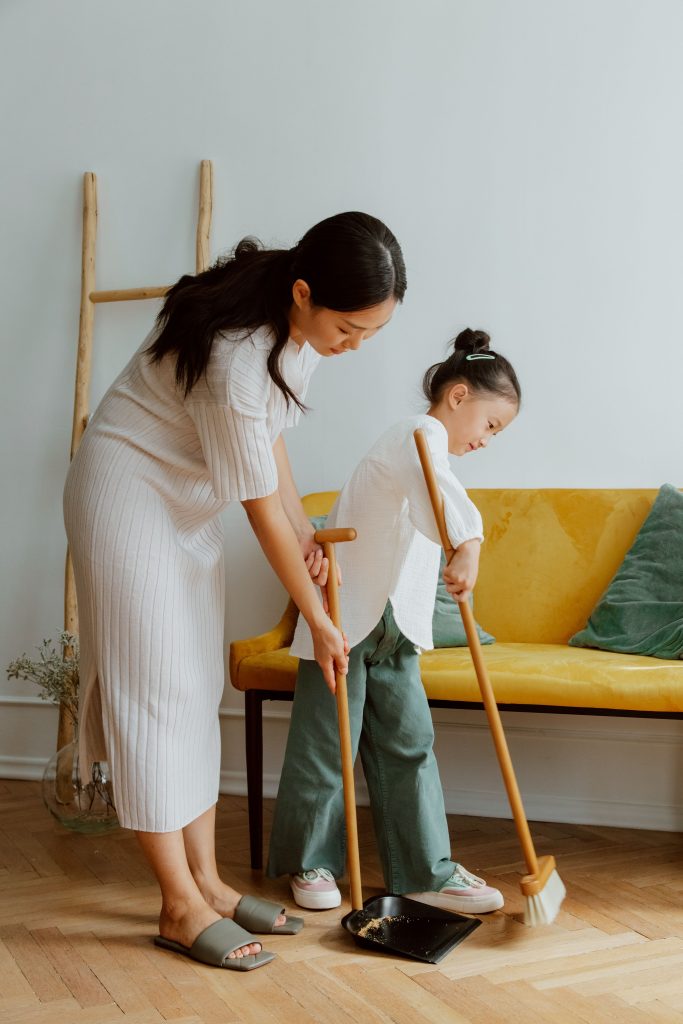
Clean the house – to make your home tidy.
I clean the house on weekends.
Do laundry – to wash clothes.
I do laundry every Sunday.
3. Evening Activities



Evenings are often a time to relax and spend time with family.
Vocabulary
Have dinner – to eat the evening meal.
We have dinner together at 6 p.m.
Spend time with family – to be together with family members.
I spend time with my children after work.
Watch TV – to look at programs on television.
I watch TV to relax.
Read a book – to look at and understand written information in a book.
I read a book before going to bed.
Use my phone – to use a mobile device.
I use my phone to check messages.
Go to bed – to get into bed to sleep.
I go to bed at 10:30.
Fall asleep – to begin sleeping.
I fall asleep quickly when I am tired.
Useful Expressions to Talk About Daily Activities
Frequency Words
Always – 100% of the time
I always brush my teeth in the morning.
Usually – most of the time
I usually walk to work.
Sometimes – occasionally
I sometimes cook new recipes.
Rarely – not often
I rarely watch TV.
Never – 0% of the time
I never skip breakfast.
Common Daily Routine Collocations

Learn these word combinations because native speakers often use them together:
| Verb | Activity |
|---|---|
| make | breakfast, coffee, dinner |
| take | a shower, a break, a walk |
| do | homework, laundry, chores |
| go | to work, shopping, to bed |
| have | breakfast, lunch, dinner |
| spend | time with family |
Practice Exercises

Exercise 1: Match the Words
Match the activity with the correct meaning.
- ___ Do laundry
- ___ Run errands
- ___ Get dressed
- ___ Fall asleep
- ___ Practice
a. Put on your clothes
b. Wash clothes
c. Improve a skill by doing it again and again
d. Start sleeping
e. Complete small tasks outside the home
Answers:
- b
- e
- a
- d
- c
Exercise 2: Fill in the Blanks
Use the words from the box.
Word Bank:
wake up / cook dinner / study / go to bed / go grocery shopping
- I usually __________ at 6:00 a.m.
- I __________ English every evening.
- My family __________ together at 6:30 p.m.
- I __________ once a week to buy food.
- I usually __________ at 10:30 p.m.
Answers:
- wake up
- study
- cook dinner
- go grocery shopping
- go to bed
Exercise 3: Choose the Correct Answer
- I need to wash my clothes. I need to ______.
a) do laundry
b) make coffee
c) attend a meeting
- Before work, I always ______.
a) fall asleep
b) get dressed
c) go to bed
- I go to the supermarket because I need to ______.
a) run errands
b) go grocery shopping
c) take a shower
Answers:
- a
- b
- b
Exercise 4: Write About Your Daily Routine
Complete the sentences.
- I usually wake up at __________.
- In the morning, I __________.
- During the day, I __________.
- After work/school, I __________.
- Before I go to bed, I __________.
Speaking Practice
Answer these questions:
- What time do you usually wake up?
- What do you do first in the morning?
- How often do you cook dinner?
- What household chores do you do?
- What do you usually do in the evening?
Try to use these words:
usually – sometimes – always – rarely – every day – once a week
Example:
“I usually wake up at 6:30. Then, I make coffee and have breakfast. After that, I go to work at 8:00. In the evening, I spend time with my family and read a book before bed.”
Canadian English Tip 🇨🇦
In Canada, people often talk about “running errands” on weekends. This means completing small tasks such as going to the bank, picking up groceries, returning items, or going to the pharmacy.
Example:
“I have a busy Saturday because I need to run some errands.”
Vocabulary Challenge
Try to write 10 sentences about your daily routine using the new vocabulary.
Example:
“I wake up early every day. I take a shower and get dressed. Then I have breakfast before I go to work.”
In Sum
Building your daily activities vocabulary in English is one of the easiest ways to improve your communication skills. These are the words and phrases you use every day when talking about your routine, work, family, and free time. The more often you read, say, write, and hear this vocabulary, the more naturally you will use it in conversations.
Practice describing your daily routine using the new words from this lesson. Even a few minutes of practice each day can help you become more confident and fluent in English. Keep adding new daily activities vocabulary to your notebook, and you’ll soon find it easier to understand others and express yourself clearly in everyday situations.